Dial Kitchen Scales vs. Everything Else – What the Different Types Actually Do
What Exactly Is a Dial Kitchen Scale?
Before we talk about types or which one to buy, let's be clear on what a dial kitchen scale even is.
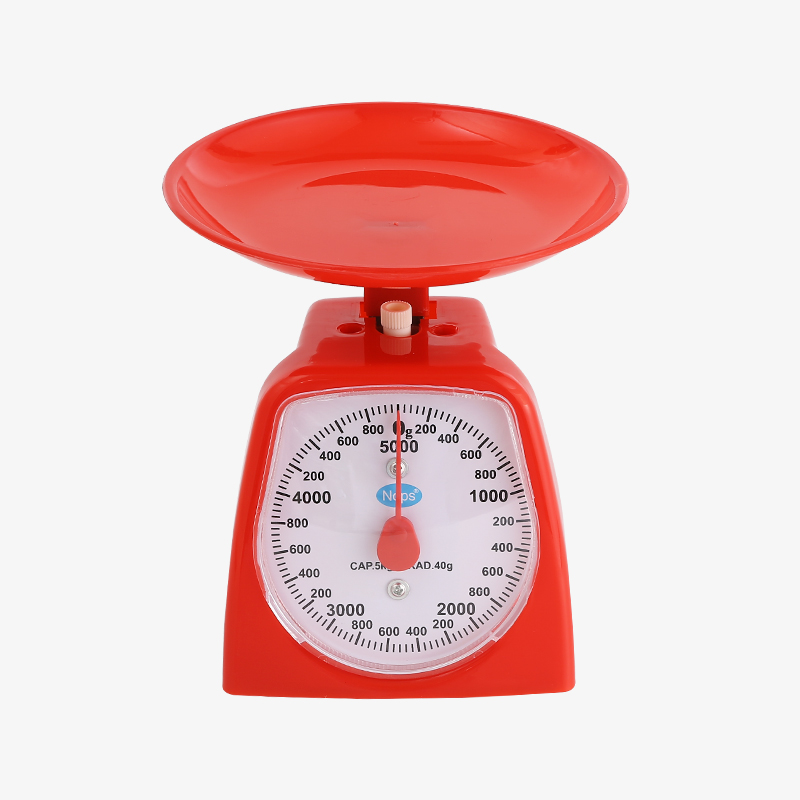
A dial kitchen scale (sometimes called a mechanical scale or analog scale) measures weight using a spring or a balance mechanism. You put food in a bowl or on a platform. The weight pushes down on an internal spring, which rotates a pointer around a circular dial. No batteries. No LCD screen. Just a needle and printed numbers.
People often confuse them with digital scales. The difference is simple: digital shows you numbers on a screen. Dial shows you a moving needle.
The classic version is the round, chrome-and-white scale your grandmother might have used for canning tomatoes. But modern dial scales come in several flavors – and knowing the difference saves you from buying the wrong one for bread dough versus coffee beans.
What Are the Different Types of Dial Kitchen Scales, and How Do You Choose the Right One?
Let me walk you through the three main types you'll actually find for sale in Western markets. After each one, I'll tell you who it's for.
Type 1: The Spring-Loaded Dial Scale (Most Common)
This is the standard household dial scale. You'll see brands like Taylor, Ozeri, or Mainstays selling them for 12to12to25. There's a spring inside. More weight = spring compresses more = needle moves further.
The good: Cheap, no batteries, works fine for basic recipes. The bad: Springs stretch over time. After a year or two, 500g reads as 480g. Also, the dial can be hard to read if you're not looking straight at it.
Choose this if you cook a few times a week, don't need extreme precision, and hate buying batteries. Skip this if you bake bread or make espresso – you need better accuracy.
Type 2: The Balance-Beam Scale (Professional Grade)
These look different. Instead of a round dial, there's a horizontal beam with sliding weights. You put your bowl on one side, then slide weights along the beam until it balances level.
The good: Extremely accurate. No spring to stretch. Can be recalibrated easily. The bad: Slower to use. You can't just glance at a needle – you have to slide weights and wait for the beam to settle.
Choose this if you bake sourdough, make pasta from scratch, or run a small cottage food operation. Skip this if you value speed over precision.
Type 3: The Dual-Scale Dial (Beginner-Friendly Compromise)
Some dial scales have two needle rings – one for grams, one for ounces/pounds. Or they have two separate dials (one for small weights, one for larger). Typically 15to15to30.
The good: No mental math converting units. The bad: The inner scale is often tiny and hard to read. And because the mechanism is still a spring, you get the same drift over time as a basic dial scale.
Choose this if you follow both European and American recipes and don't want to switch scales constantly. Skip this if you have poor eyesight – those tiny numbers are brutal.
My dial scale doesn't go back to zero. Is it broken, or am I doing something wrong?
This is the single most common complaint. Someone puts an empty bowl on the scale, and the needle points to 20g instead of 0. Here's what's happening.
First, check the zero adjustment knob or wheel. Almost every dial scale has one – usually underneath or on the side. Turn it slowly until the needle lines up with zero. That fixes 80% of cases.
If that doesn't work, the spring has stretched permanently. This happens when you regularly exceed the scale's maximum weight. Say you buy a 5kg scale (11 pounds) but keep weighing 6 kg of potatoes. Over time, the spring doesn't snap back all the way. There's no fix for this except replacement.
One tip that saves money: always zero the scale with your bowl on it before you add ingredients. That's what the tare adjustment is for. If your scale doesn't have a tare knob, you just subtract the bowl weight mentally or buy a different model.
Are dial scales as accurate as digital scales for measuring flour down to the gram?
Short answer: sometimes yes, but usually no – for reasons that surprise people.
A high-quality dial scale (especially the balance-beam type) is just as accurate as a digital scale. OHAUS mechanical scales are used in labs. They're accurate to 0.1g.
The problem is that most kitchen dial scales are not high-quality. A $20 spring dial scale from a big-box store has a tolerance of ±5g to ±10g. That's fine for measuring a pound of pasta. It's terrible for measuring 15 g of baking powder.
Here's a real-world test you can do at home: weigh a nickel. A US nickel weighs exactly 5 g. Put it on your dial scale. Does the needle point exactly to 5g? Does it point to the same 5g if you put the nickel on three different spots on the platform? If not, your scale isn't accurate enough for baking.
Dial Scale Types Side by Side (No Marketing Fluff)
Let's put the three types next to each other so you can see the trade-offs clearly.
|
Feature
|
Basic Spring Dial
|
Balance-Beam Dial
|
Dual-Scale Dial
|
|
Typical price (Western retail)
|
12–12–25
|
60–60–150
|
15–15–30
|
|
Accuracy
|
±5–10g (drifts over time)
|
±1–2g (stable for decades)
|
±5–10g (same spring drift)
|
|
Speed to read
|
Fast (needle moves quickly)
|
Slow (wait for beam to balance)
|
Fast
|
|
No batteries needed
|
Yes
|
Yes
|
Yes
|
|
Tare function
|
Usually a knob or wheel
|
Yes (move counterweight)
|
Usually a knob
|
|
Ease of reading in low light
|
Poor (need to see needle)
|
Poor (need to see beam level)
|
Poor (tiny numbers)
|
|
Best for
|
Everyday cooking, soups, pasta
|
Bread baking, espresso, small batches
|
People who switch between metric and imperial
|
|
Worst for
|
Baking (not accurate enough)
|
Speed-driven meal prep
|
Anyone over 45 (small print)
|



 عربى
 Español
 Português