How Accurate Are Small Mechanical Kitchen Scales?
What Do We Mean by “Small Mechanical Kitchen Scale” and “Accurate”?
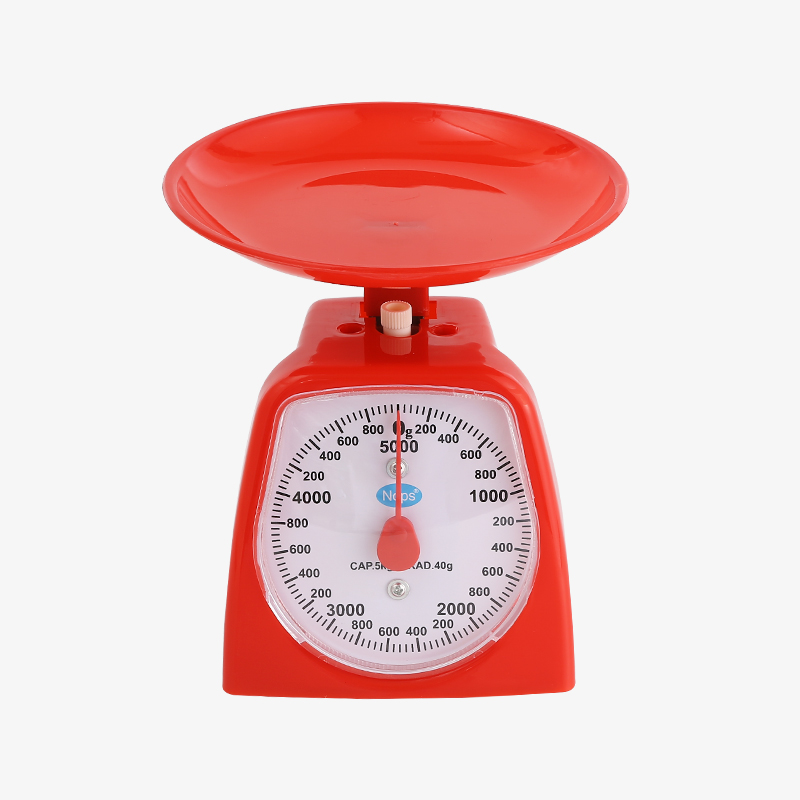
A small mechanical kitchen scale is a non-digital, spring-based or balance-based device designed to weigh food portions typically under 5 kilograms (about 11 pounds). The “small” part usually means a compact footprint—maybe 6 inches wide—and a capacity between 1kg and 5kg. You'll see them in camping kits, tiny apartment kitchens, and coffee brewing stations.
Accuracy is where things get slippery. In the scale world, accuracy means how close the displayed weight is to the actual weight. A perfectly accurate scale tells you that 250g of flour is exactly 250g. But here's the catch most product listings hide: accuracy is usually stated as “± X grams” or “± X% of reading.”
The Real Accuracy Numbers
Let me walk you through what small mechanical scales actually deliver, based on tear-downs and user reports, not marketing copy.
Spring-based dial scales (the cheap, common kind)
These work by stretching or compressing a metal spring. The spring's movement rotates a needle around a dial. Brands like Taylor, Ozeri, and Mainstays sell them for 10to10to25.
Real-world accuracy: ±5g to ±15g depending on the weight.
At low weights (under 50g), they're terrible. A spring needs a certain minimum force to overcome internal friction. Put 10g of yeast on a cheap dial scale, and the needle often doesn't move at all. Put 20g—still nothing. At 30g, it might jump to 35g. So small quantities just vanish.
At mid-weights (200g–1000g), they're okay. ±5g is typical. That's fine for measuring a cup of rice or a potato.
At high weights near the scale's maximum, the spring stretches unevenly. Accuracy can drift to ±15g or worse. And over months of use, the spring permanently stretches. That 500g reading that was accurate last year might now be 485g.
Balance-beam scales (the old-school accurate ones)
These don't use a spring. Instead, you slide weights along a beam until the beam balances level. Brands like OHAUS and Salter made millions of them.
Real-world accuracy: ±1g to ±3g across the full range, even after decades.
Why the difference? A balance beam compares unknown weight against known standard weights. No spring fatigue. No friction issues (if the knife-edge pivots are clean). The downside is they're slower and bulkier. You don't see many home cooks using them because of the learning curve.
The accuracy cliff nobody warns you about
Here's something test reports rarely mention: mechanical scales are only as accurate as the surface they sit on. Put a spring dial scale on a slightly uneven counter, and the needle zeroes incorrectly. Tilt it by one degree, and a 500g weight might read 490g. Digital scales have this problem too, but they're better at compensating electronically. Mechanical scales have no brain. They just reflect physics.
Where That Accuracy Level Works (And Where It Fails)
The Weekend Bread Baker
Someone is making one sourdough loaf per week. Recipe calls for 500g flour, 350g water, 10g salt, 5g yeast.
On a cheap spring dial scale (±10 g accuracy), the flour could be 490 g–510 g. That's a 4% variation—enough to make dough noticeably wetter or drier. The 5g of yeast could be anywhere from 0g to 15g because the scale barely responds below 20g. That yeast variation alone can ruin a rise.
So for bread baking, a small mechanical scale with a spring is not accurate enough. Period. People who say otherwise either got lucky or don't notice when their bread is inconsistent.
But a balance-beam mechanical scale (±2 g accuracy) works fine for bread. The problem is that most home bakers don't want to use a balance beam because it's slow and looks like a science lab prop.
The Pour-Over Coffee Drinker
Someone is weighing 18 g of coffee beans for a single cup. Total weight range is tiny—usually 15g to 30g.
On a spring dial scale, this is hopeless. As I mentioned earlier, the scale might not register anything under 20g, then jump to 25g. You'd be guessing.
Coffee nerds figured this out years ago. That's why the specialty coffee world almost universally uses digital scales with 0.1 g resolution. Mechanical scales, even good ones, don't belong here.
Mechanical vs. Digital for Accuracy (Real Numbers, No Hype)
Let's put this side by side in plain terms that match what Western shoppers actually search for.
|
Aspect
|
Small Mechanical (Spring Dial)
|
Small Mechanical (Balance Beam)
|
Entry-Level Digital
|
|
Real-world accuracy (new)
|
±5g–15g (depends on weight)
|
±1g–3g
|
±1g–2g
|
|
Accuracy after 2 years
|
Drifts 10–20% (spring fatigue)
|
Nearly unchanged
|
Drifts if load cell damaged or battery low
|
|
Lowest measurable weight
|
20g–30g (often nothing below that)
|
1g–2g
|
1g–2g
|
|
Affected by uneven surface
|
Yes, significantly
|
Yes, moderately
|
Yes, but less so
|
|
Affected by low battery
|
N/A (no battery)
|
N/A
|
Yes (drifts before dying)
|
|
Price (Western retail)
|
10–10–25
|
40–40–120
|
12–12–30
|
|
Best for
|
Meal prep, pasta, soup, pet food
|
Baking, small quantities, lab-like precision
|
Most home cooking, coffee, baking
|
|
Avoid for
|
Baking, coffee, yeast, spices
|
Speed-critical tasks
|
Outdoor use, long off-grid stretches
|



 عربى
 Español
 Português